Nagasaki University-Led Team Finds Crab Sidewalking Originates from 200-Million-Year-Old Ancestor

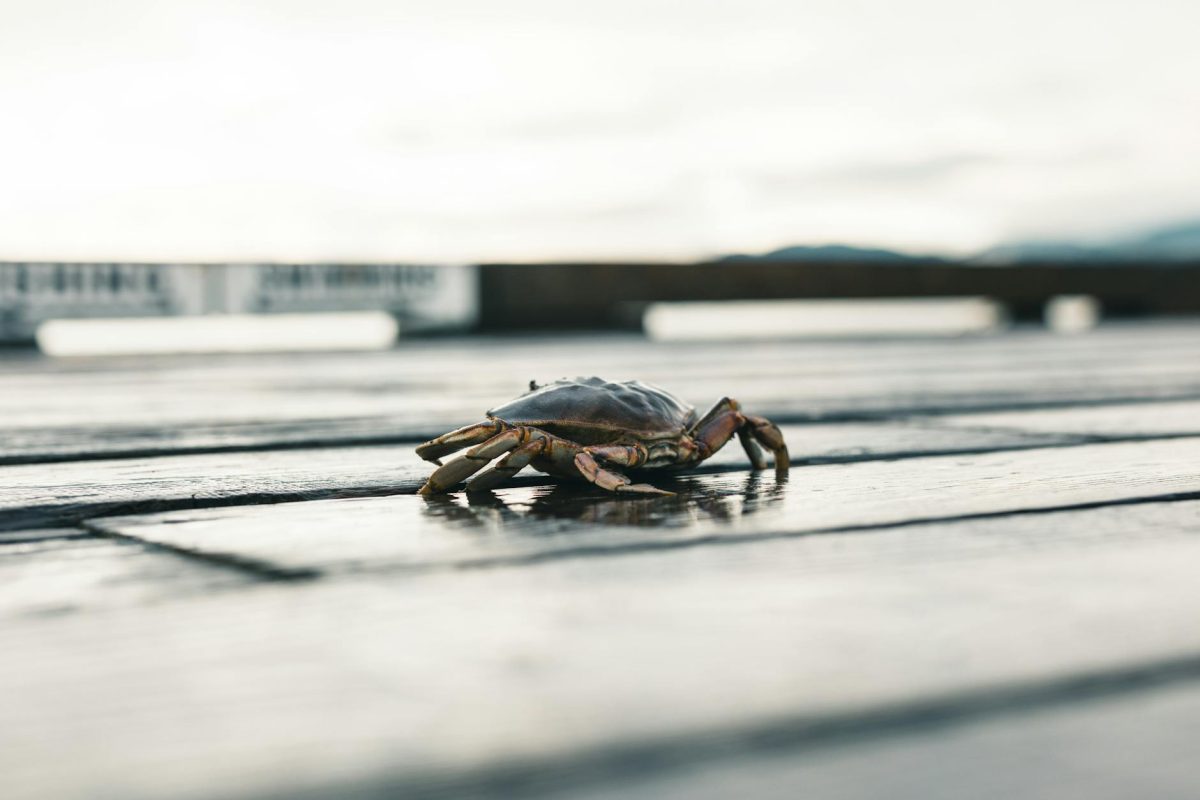
A newly discovered ancestor of modern crabs has been found to have walked sideways, leading to the evolution of the unique behavior in modern crabs. This finding is significant because it sheds light on the evolutionary history of crustaceans and the adaptation of their movement patterns. The discovery was made by a team of scientists from Nagasaki University, led by Dr. Taro Uyeno, who used advanced CT scans to study the fossilized remains of the ancient crustacean.
What Happened
According to a report by Jiji Press, a team of scientists from Nagasaki University, led by Dr. Taro Uyeno, has discovered that the behavior of crabs walking sideways originated from an ancestor that roamed the Earth around 200 million years ago. The team used advanced CT scans to study the fossilized remains of the ancient crustacean, which was found in the Iwaki District of Fukushima Prefecture, Japan. The fossil, named Iwakius, is estimated to be around 200 million years old, dating back to the Early Jurassic period. The CT scans revealed that Iwakius had a unique body shape, with a broad, flat carapace and a pair of claws that were more suited for sideways movement than forward movement. This suggests that the ancestor of modern crabs had already developed the ability to walk sideways, which is a unique behavior among crustaceans. The team's findings were published in the journal Nature Communications on May 24. Account to Jiji Press revealed that Dr. Uyeno and his team were able to obtain the fossil sample from the Iwaki District, where it was found embedded in a layer of rock. The team then used advanced CT scans to study the fossil, which allowed them to see the internal structure of the crustacean's body. The CT scans revealed that Iwakius had a unique body shape, with a broad, flat carapace and a pair of claws that were more suited for sideways movement than forward movement. This suggests that the ancestor of modern crabs had already developed the ability to walk sideways, which is a unique behavior among crustaceans.
Why It Matters
The discovery of the 200-million-year-old ancestor of modern crabs has significant implications for our understanding of the evolutionary history of crustaceans. Crabs have been walking sideways for millions of years, and this unique behavior has allowed them to thrive in a variety of environments. The discovery of Iwakius suggests that the ability to walk sideways was already present in the ancestor of modern crabs, and that this behavior has been passed down through generations. This has important implications for our understanding of the evolution of movement patterns in crustaceans. Dr. Taro Uyeno stated that the discovery of Iwakius was a significant finding because it showed that the behavior of crabs walking sideways was not unique to modern crabs, but rather was a characteristic of their ancestors. This suggests that the ability to walk sideways was an important adaptation for the survival and success of early crustaceans. The team's findings also suggest that the evolution of movement patterns in crustaceans is more complex than previously thought. While some crustaceans, such as lobsters and crayfish, are able to move forward and backward, others, such as crabs, are able to move sideways. The discovery of Iwakius suggests that the ability to walk sideways was already present in the ancestor of modern crabs, and that this behavior has been passed down through generations. This has important implications for our understanding of the evolution of movement patterns in crustaceans.


What We Don't Know Yet
While the discovery of Iwakius is significant, there is still much that we do not know about the evolutionary history of crustaceans. One area of uncertainty is the exact timing of the evolution of the ability to walk sideways in crustaceans. While the team's findings suggest that the ancestor of modern crabs had already developed this ability around 200 million years ago, it is unclear whether this was a universal characteristic of all crustaceans at that time. Another area of uncertainty is the role of environmental factors in the evolution of movement patterns in crustaceans. While the team's findings suggest that the ability to walk sideways was an important adaptation for the survival and success of early crustaceans, it is unclear whether this was due to the presence of specific environmental factors, such as strong currents or predators. The team's findings also raise questions about the diversity of movement patterns in crustaceans. While some crustaceans, such as lobsters and crayfish, are able to move forward and backward, others, such as crabs, are able to move sideways. It is unclear whether this diversity of movement patterns is a result of genetic differences between species, or whether it is due to environmental factors. Finally, the team's findings raise questions about the conservation status of crustaceans. While some crustaceans, such as lobster and crayfish, are commercially important species, others, such as crabs, are not. It is unclear whether the ability to walk sideways in crabs is an adaptation that is unique to this species, or whether it is a characteristic of other crustaceans as well. Dr. Taro Uyeno stated that the discovery of Iwakius was a significant finding, but that there is still much that we do not know about the evolutionary history of crustaceans. He noted that further research is needed to understand the exact timing and mechanisms of the evolution of the ability to walk sideways in crustaceans. He also noted that the team's findings raise important questions about the diversity of movement patterns in crustaceans, and the conservation status of these species.
What to Watch
In the next 24-72 hours, we can expect to hear more about the team's findings and the implications for our understanding of the evolutionary history of crustaceans. Dr. Taro Uyeno is likely to give interviews to the media about the discovery of Iwakius and the team's findings. The team's paper is also likely to be widely cited in the scientific community, and may lead to further research on the evolutionary history of crustaceans. In the coming weeks and months, we can expect to see more research on the diversity of movement patterns in crustaceans, and the conservation status of these species. We will also see more about the team's findings and the implications for our understanding of the evolution of movement patterns in crustaceans. Dr. Taro Uyeno will likely present his team's findings at a scientific conference, and may also give talks about the discovery of Iwakius and the team's findings. The team's paper will also be widely discussed in the scientific community, and may lead to further research on the evolutionary history of crustaceans. This will be an exciting time for the scientific community, and we can expect to see many new developments in the coming weeks and months.