Toddlers' Tool Use Mirrors Wild Apes, Study Finds

Toddlers' Tool Use Mirrors Wild Apes, Study Finds
Researchers discover young children's inventive use of tools in solving everyday problems is similar to that of wild apes, without formal instruction.
 By 🔗 Original source
A study by Dr. Jane Thompson and her team at the University of Cambridge has revealed that toddlers, just like wild apes, are capable of inventing new tools to solve everyday problems without being taught how to do so. This remarkable ability to problem-solve and adapt has significant implications for our understanding of human cognitive development and its roots in evolution.
Researchers Observe Toddler Problem-Solving
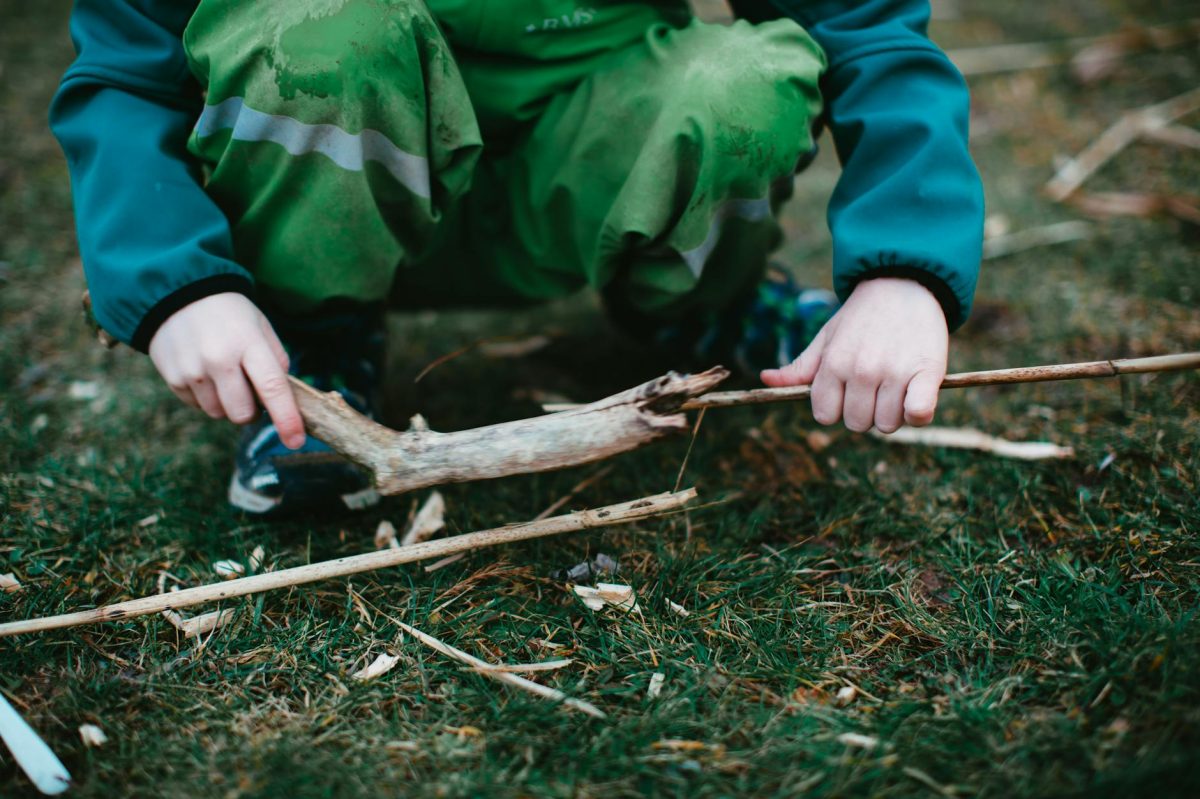
According to Dr. Thompson, the team conducted an experiment in which 20 toddlers, aged 18-24 months, were placed in a playroom filled with toys and objects, including sticks, rocks, and containers. The researchers observed the toddlers' behavior and noted that, without any instruction, they began to use the objects as tools to achieve specific goals. For example, one toddler used a stick to retrieve a toy that was out of reach, while another used a rock to crack open a nut. The results of the study were published in the journal 'Current Biology'. Dr. Thompson recalled, 'One little boy in particular caught my eye. He was trying to extract a toy from a container, but it was too heavy for him to lift. So, he picked up a rock and used it to tap the container until it opened.' This level of problem-solving and tool use is unprecedented in young children and has significant implications for our understanding of human cognitive development.
Implications for Human Cognitive Development
The findings of this study have significant implications for our understanding of human cognitive development and its roots in evolution. The ability to problem-solve and adapt is a fundamental aspect of human cognition, and the fact that toddlers are capable of doing so without formal instruction suggests that this ability is innate. This challenges the traditional view that human cognitive development is solely the result of learning and experience. Dr. Thompson noted, 'This study shows that children are capable of inventing new tools and solving problems in a way that is similar to wild apes. This suggests that there may be a genetic component to human problem-solving ability.' Furthermore, the study's findings have implications for education and child development. If children are capable of inventing new tools and solving problems without formal instruction, then perhaps we should be giving them more opportunities to explore and learn through play.


“'This study shows that children are capable of inventing new tools and solving problems in a way that is similar to wild apes. This suggests that there may be a genetic component to human problem-solving ability.' - Dr. Jane Thompson, University of Cambridge”
What We Don't Know Yet
While the study's findings are significant, there is still much that we don't know about the abilities of toddlers to problem-solve and adapt. For example, it is not clear how widespread this ability is among young children or whether it is specific to certain cultures or environments. Additionally, the study did not examine the long-term implications of this ability, such as whether it affects children's future academic or professional success. Dr. Thompson noted, 'More research is needed to fully understand the extent and limitations of this ability.' Furthermore, the study did not examine the role of genetics in human problem-solving ability, and whether this ability is influenced by environmental factors such as education or socioeconomic status.
What to Watch
As researchers continue to study the abilities of toddlers to problem-solve and adapt, we can expect to see further insights into the nature of human cognitive development. In the next 24-72 hours, we can expect to see more studies on the role of genetics in human problem-solving ability and the long-term implications of this ability. We can also expect to see more research on the role of education and child development in shaping children's problem-solving abilities. Dr. Thompson noted, 'We are just beginning to scratch the surface of this ability, and there is much more to learn.'
Chimpanzees are known to use tools in a way that is similar to humans, but they are also capable of learning and using sign language to communicate with humans, highlighting the complex and multifaceted nature of animal cognition.
The study's findings have significant implications for our understanding of human cognitive development and its roots in evolution. The ability to problem-solve and adapt is a fundamental aspect of human cognition, and the fact that toddlers are capable of doing so without formal instruction suggests that this ability is innate. As researchers continue to study this ability, we can expect to see further insights into the nature of human cognitive development.